Research & Writing
Journal
- Writing that traces the ideas behind my projects — and the projects behind my ideas.
- Two texts: a critique of parametric design (Yuan) and a case study of experience-driven airport architecture (San Diego T1).
- Plus a short reflection on the semester of building this portfolio.
Journal · Yuan · DD2000 Design Context 2 · Tutor Mr Shuo He · 2025
Parametricism & AI Art — a critique
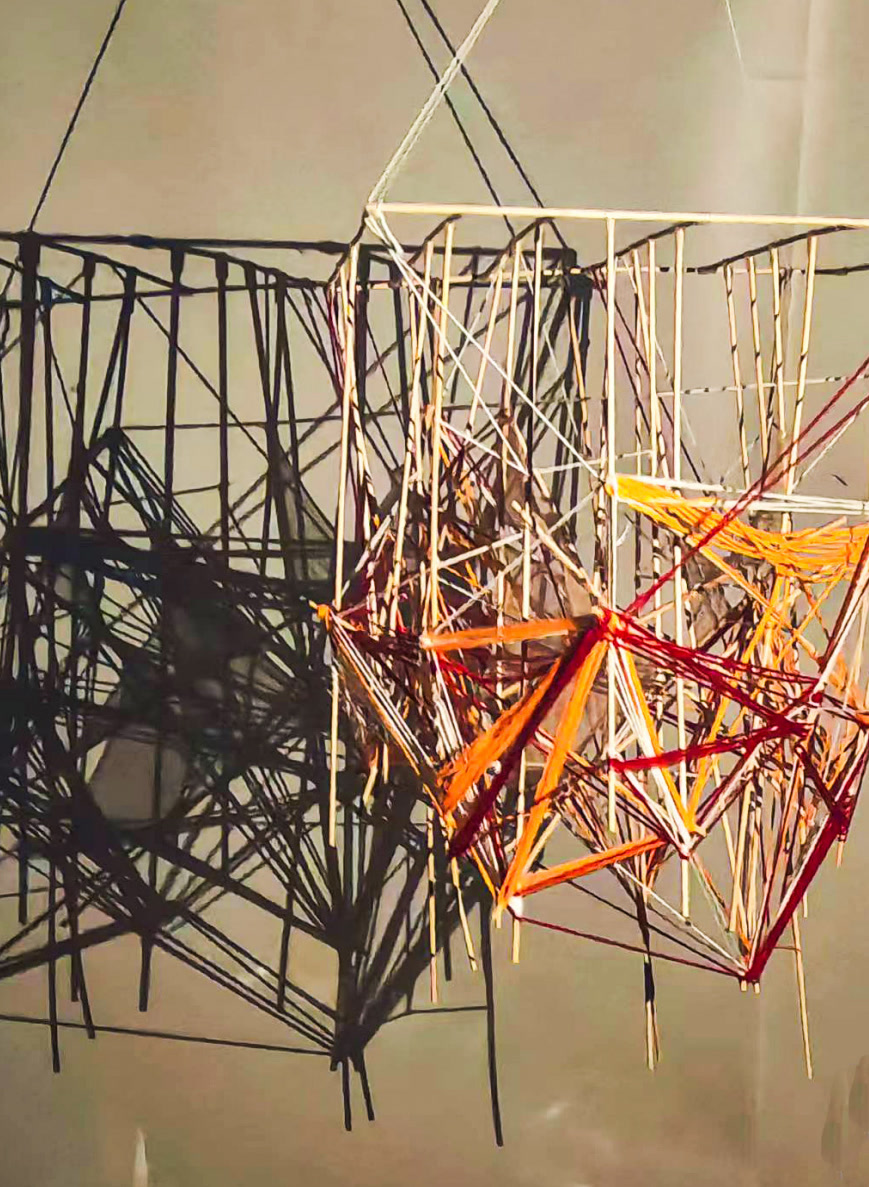
What I learned
- Definition: parametric design defines form through parameters and algorithms — dynamic generation with precise control over complex geometry.
- In architecture: it balances aesthetics with energy performance, responding to sun, wind and load in real time.
- In art: it continues the Constructivist line — points, lines and planes as visual parameters; creation shifts from "subjective randomness" to "quantifiable, iterative precision".
- AI art joins the same logic: latent parameters, prompt variables, iterative generation — a digital descendant of the same idea.
"When algorithms forget life, beauty becomes a style and culture loses its living context."
My critique
- Unguarded optimisation: pure parameter-hunting ignores the needs that cannot be quantified.
- Culture without context: parametric motifs are copied globally — the homogenisation crisis of "one size fits all".
- Hand vs. algorithm: the visible trace of the hand carries meaning that the screen cannot replace.
The seed of my position
- The source of form is not the parameter but life — the woven chair, the smoke, the sound of a mushroom forest.
- Every project in this portfolio tests the same claim: technology is a servant, caress is the client.
Article · Case Study · Aviation Architecture
Gateway to the West Coast — Gensler's San Diego Airport Terminal 1
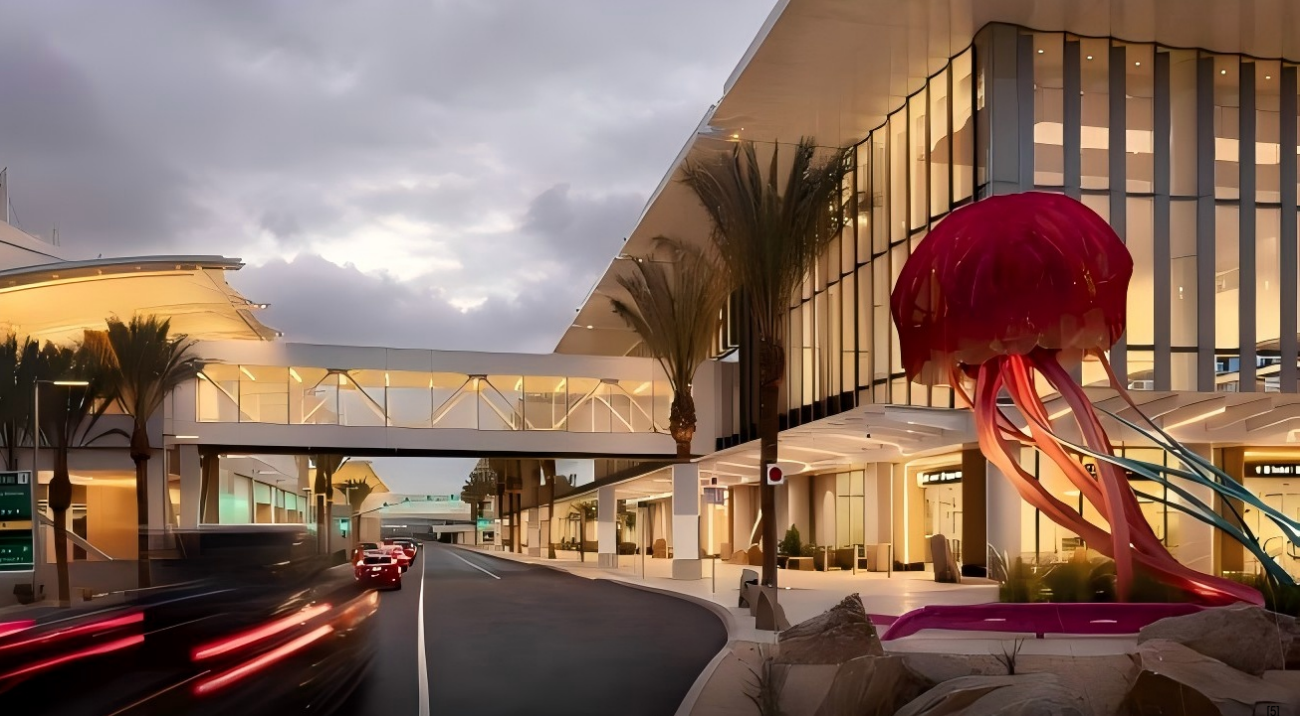
Context
- Pressure: the busiest single-runway airport in the US — designed for 2.5 million annual passengers, stretched to 12 million by 2020.
- Role of design: Gensler's $3.8 billion redevelopment positions the terminal as a "cultural front door" reflecting San Diego's coastal beauty and laid-back lifestyle.
- Phasing: Phase One (September 2025) adds 19 gates and 13 security lanes with a seamless "curb-to-gate" flow; Phase Two (2028) grows the terminal to 30 gates.
Form & material
- The wave: an 800-foot wavy roof echoes the Pacific tides — structure and identity in one gesture.
- Modular precision: steel modules fabricated to ±3 mm tolerance cut on-site time by 25%; the farthest gate is a 10-minute walk.
- "Luminous Wave" facade: 30% recycled aluminium panels reduce cooling load by 18% while washing the hall with diffused light.
Sustainability
- Low-carbon concrete cuts embodied carbon by 20%.
- Photovoltaic roof supplies 15% of the terminal's electricity.
- Local FSC-certified pine ties the interior back to California's forests.
What I take away
- Infrastructure can carry identity, soothe users and perform sustainably — at any scale.
- Great systems hide: the traveller feels calm waves, not engineering.
- The same intention I apply to a chair or a village — care made spatial — works at the scale of a terminal too.
Across the Semester · Week 1 – 10
How this site was built.
- Weeks 1–3: rapid ideation and site studies — from a campus chair to a retail narrative to a mountain village.
- Weeks 4–6: psychology research — Morita therapy, the empty-chair technique, the spotlight effect, soundscape science.
- Weeks 7–9: fabrication and documentation — weaving, rendering, models, and the two portfolio films.
- Week 10: this site — navigation discipline (every entry through the top-right corner) and bullet-first writing (every paragraph distilled to points).